Employers keep treating GLP-1s like a coverage question. Cover them. Don't cover them. Cap them. Carve them out. Make people jump through prior auth. That's a plan design. It is not a strategy or a long-term solution.
Segal /EBN just put numbers on what a lot of you already feel in the claims file. 2027 medical trend is sitting around 10%. Pharmacy is 11.5%. Plans that cover GLP-1s for obesity saw Rx trend at 18.3% in 2025. Take obesity coverage off the table and that number drops to 10.5%. Almost eight points of trend from one drug class.
Aon is projecting 9.5% if you do nothing in 2027, on top of 8.8% this year. Average employer cost already north of $14,000 per employee. GLP-1s are on the driver list, right next to specialty and high-cost claims.
Bank of America disclosed more than $250 million a year on GLP-1s. That's about 13% of a $2 billion health budget.
They're staying in. Most employers I talk to cannot. Here's why too!
The GLP-1 part that should make you uncomfortable.
Collective Health's CEO said the quiet part out loud.
"Pharmacy claims and medical claims don't talk to each other." So you are managing a total-cost drug as a PBM line item. You cannot see whether the weight came off, whether the A1C moved, whether the person is still on the shot in month 14, or whether they bounced the second they stopped.
You are paying for a drug that only works if the person changes how they eat, move, sleep, and deal with stress. And then you are shocked when they never get off it.
That is not a PBM failure. That is a behavior gap.
If you wait until renewal to "deal with GLP-1s," you already lost.
Renewal is where the bill shows up. The spend started 11 months ago, one prescription at a time, with no one sitting with that employee on the habits that put them on the drug in the first place.
Carve-outs feel decisive. Eligibility cuts feel responsible. Step therapy feels like control. What they actually do is kick the cost into next year and train your people that the plan is the enemy. You still have the metabolic risk. You still have the claims. You just added a fight with your workforce.
The only way off GLP-1s that doesn't blow up your plan is to correct the behavior. Period.
Not an app. Not a PDF from the wellness vendor. Not a 6-week challenge nobody finishes.
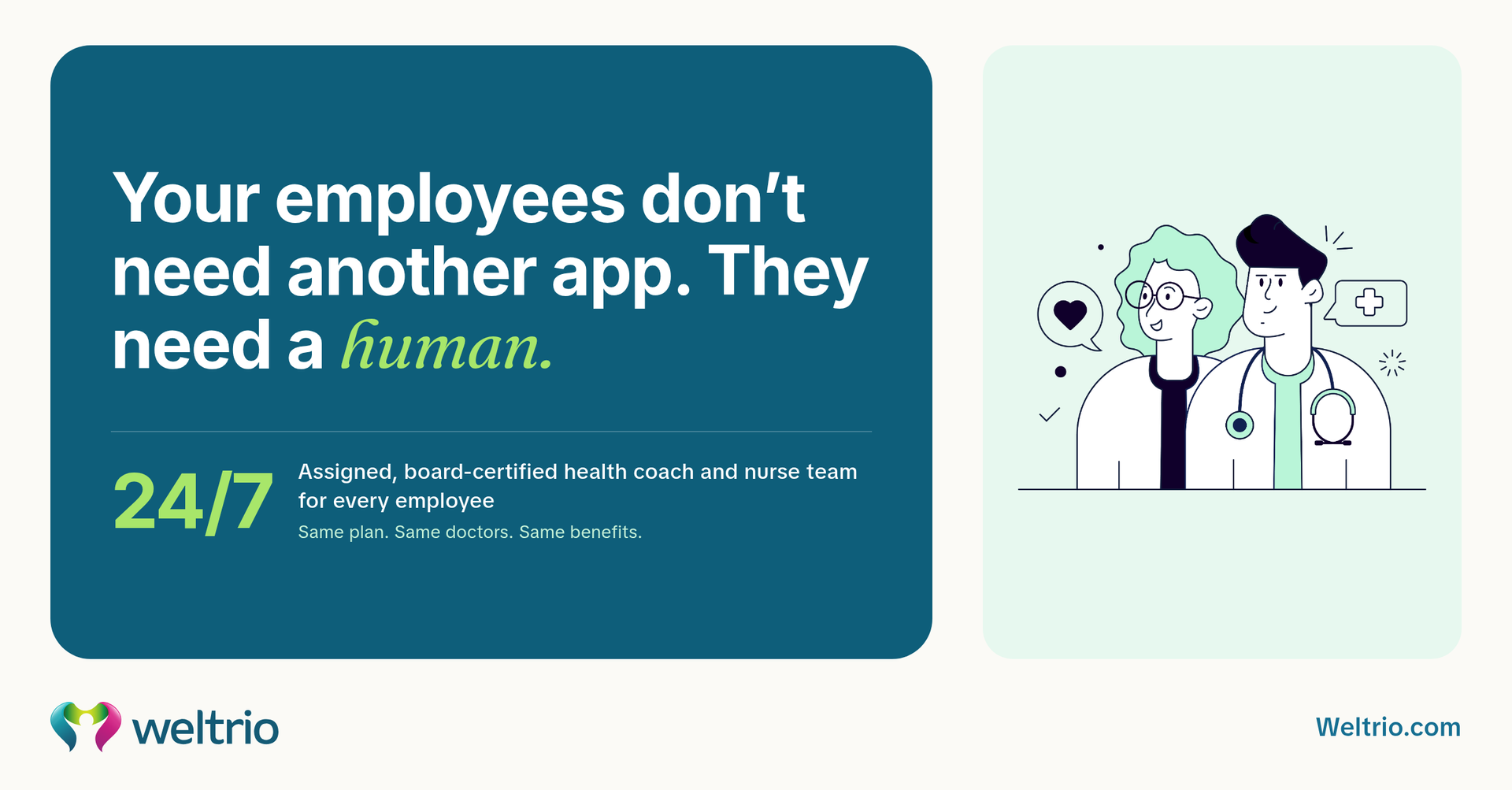
A real person. Same coach. Same nurse. Someone who already knows the employee's history, who reaches out on a schedule, who can talk through food, movement, side effects, and "I don't want to be on this shot forever" without it going through HR.
Rising GLP-1 costs are controllable
That's the job Weltrio was built to do. We sit in the gap your broker and your vendors cannot fill. Plan design sets the rules. Care logistics handles the visit. Relationships change what the employee does next. We assign a dedicated coach and nurse to every employee, we contact them before they panic-buy care, and we work the habits that keep people on expensive drugs they were never supposed to stay on.
You implement that now, you get three things by year-end:
- You save money this year, because fewer people start the drug for the wrong reason and more people have a path off it.
- You avoid the long-term carve-out circus. Once a GLP-1 is a permanent benefit, you will spend the next three renewals arguing about who qualifies. Fix the behavior and you don't need a 40-page exception policy.
- You walk into renewal with a story the carrier has to respect. Trend is a function of what happened in the population. If your people are healthier and fewer of them are on a $1,000/month shot, that shows up. If they aren't, you get the 9–11% letter and a suggestion to shift more cost to employees.
GLP-1 attention is not "after open enrollment." The time is now.
Do you have a GLP-1 strategy plan?
Open enrollment is when you lock the design. The coaching, the trust, the habit work has to be in motion before that, or you are designing around a problem you refused to touch.
If you want to get ahead of rising healthcare costs, stop asking only "should we cover GLP-1s?"
Instead ask: How can we help our people get off of them?
If the answer is "the PBM" or "the employee, I guess," you already know how this renewal ends. If you want a partner that will actually do the behavior work, inside the plan you already have, that's a conversation we should have this month. Not in November.
Forming a GLP-1 plan now is the right approach to helping reduce your healthcare spend, improve employee health, while increasing productivity and lowering absenteeism.
See how Weltrio can help you with your GLP-1s problem at weltrio.com.