America's Medical Debt Crisis: Why Insured Americans Still Go Broke
Over 100 million Americans carry medical debt right now — and most of them have health insurance. In this episode of Behind the Premium, Weltrio's benefits advocates, a veteran broker, and healthcare strategists break down exactly how the system is failing employees, what's driving costs no one is talking about, and what employers can do before the next renewal.
$74B
Borrowed in 2024 just to pay healthcare bills
100M+
Americans currently carrying medical debt
72%
Of U.S. bankruptcy filings tied to medical or health issues
1 in 4
Employees who can't explain how their own health plan works
36%
Of American households carrying medical debt right now
Meet our episode's panelists
Join us on an upcoming episode of Behind The Premium Podcast

Kody King
Host | Behind The Premium
Rhonda Nerenberg
Founder | Chief Health Innovation Officer | RN, BSN, NBC-HWC, MS in Nutrition

Monique Maletich
Patient Health Advocate & Holistic Health Practitioner

Jacob Davis
CEO | Weltrio
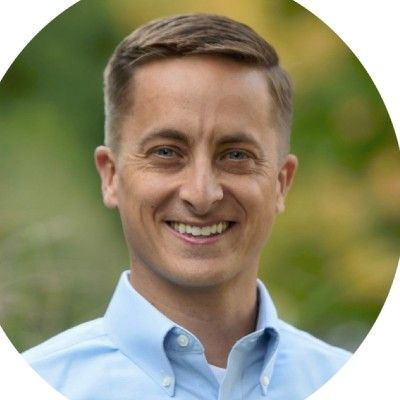
Jon Knudson
Co-Founder | Knudson Benefits Group
Behind The Premium Podcast
Season 2 Episode 1
- Published by Behind The Premium
- Sponsors: Weltrio.com
- Panel: Monique, Rhonda, Jacob (Weltrio) & John Knutson (Knutson Benefits Group)
- Topics: Medical Debt · Employee Benefits · Health Plan Design · Benefits Advocacy
Timestamp
- Why Insured Americans Still Go Broke
- How the Healthcare System Went Wrong — and Who's Really at Fault
- The Pharmaceutical Trap: How Drug Pricing Became a Debt Driver
- Broker Blind Spots: When Cost-Cutting Shifts the Burden
- AI in Healthcare: Promise, Peril, and Unnecessary Costs
- The Proactive Advocacy Solution: Closing Gaps Before They Become Debt
- Creative Plan Design: Paying Zero Out-of-Pocket Is Possible
- Frequently Asked Questions
- Full Video Transcript
Why Insured Americans Still Go Broke
What if the benefits you're offering your employees are quietly setting them up to fail? That's the question that opens this episode of Behind the Premium — and the answer is more alarming than most HR leaders or business owners realize. Right now, more than 100 million Americans carry medical debt, and the majority of them are insured. The card in their wallet didn't protect them. The plan let them down.
You're not alone if this surprises you. Most employers and employees assume health insurance means health coverage. But the gap between having a plan and being financially protected by that plan is widening every year. High out-of-pocket maximums, plan designs that shift costs onto employees, and near-universal confusion about how plans actually work have turned American healthcare into one of the leading drivers of household debt and bankruptcy.
The statistics make this concrete. Thirty-one million Americans borrowed money in 2024 just to pay their healthcare bills — an estimated $74 billion in total. One in four employees can't explain how their own health plan works. And 72% of all U.S. bankruptcy filings are connected to medical or health issues in some way. These aren't rare edge cases. They're predictable outcomes of a system that was never fully designed to protect the people inside it.
Monique, a benefits advocate and health coach at Weltrio who works one-on-one with employees, puts it plainly: she knows exactly how these struggles play out in real life because she lives them with the people she serves. Employees don't understand their plans, and when a health event hits, the financial damage comes as a complete shock. That shock — compounded by stress, fear, and confusion — is where the debt starts.
How the Healthcare System Went Wrong — and Who's Really at Fault
No single villain designed the American healthcare debt crisis. That might be the most important thing to understand — because blaming one actor leads to the wrong solutions. The panel's consensus is clear: no one intended to build a system that drives insured families into debt. But the law of unintended consequences has done exactly that.
Rhonda, a Weltrio benefits advocate, points to the structural reality: costs have become so high that businesses simply can't carry the full burden anymore. So they shift it to employees. The allowable out-of-pocket maximum for an individual is now $10,000 per year. For a family, it's $20,000 — and out-of-network situations have no ceiling at all. Most American households don't have $10,000 available in a health emergency. That's not a personal failing. That's a system problem.
Jacob adds another layer: the people making decisions at the top of the system often have conflicts of interest that aren't visible to ordinary consumers. Government bodies that guide healthcare recommendations sometimes include board members with ties to pharmaceutical companies or other financial interests. The system doesn't have a single bad actor — it has a structure that consistently prioritizes financial interests over consumer protection at every level. As the system grew, so did the damage.
John Knutson, a 21-year veteran benefits broker, describes it as a "piecemeal" construction. No committee sat down and designed the system you see today. Instead, it accumulated — bolt-on legislation, new regulations, coverage mandates — each piece added to an already confusing structure. The removal of lifetime benefit maximums helped a small group of people enormously, but it also created a cost spiral that insurance companies now struggle to absorb. Forcing everyone to buy identical coverage eliminated the cost incentive for healthy behavior. Good drivers pay less for car insurance. Healthy employees pay the same as everyone else.
"One in four employees can't even explain how their own health care plan works. And most of them are insured."
— Kody King Host, Behind the Premium
Key Insight
In 2026, the average individual out-of-pocket maximum is $10,000. The family maximum is $20,000. Out-of-network costs have no legal ceiling. Most American households cannot absorb a single maximum out-of-pocket event without going into debt — even with full insurance coverage in place.
"We've created a bit of a monster — we told pharmaceutical companies they could charge whatever they want to incentivize drug development, and now we're trying to rein it back in."
— John Knutson, Knutson Benefits Group
The Pharmaceutical Trap: How Drug Pricing Became a Debt Driver
One of the most revealing discussions in this episode focuses on prescription drug costs — and how a well-intentioned law created a pharmaceutical pricing crisis that now fuels employee debt. Decades ago, pharmaceutical companies had no incentive to develop drugs for rare diseases, since small patient populations couldn't generate enough revenue to justify the research. Legislation changed that by allowing drug companies to charge whatever the market would bear for those treatments.
The result was genuinely lifesaving. Medications now exist for rare conditions that would have been death sentences a generation ago. But that same pricing freedom, without guardrails, spread far beyond rare diseases. Today, the U.S. and New Zealand are the only two countries in the world that allow pharmaceutical companies to advertise drugs directly to consumers. Every night, television viewers are marketed prescription medications — and those marketed drugs are rarely cheap.
Rhonda gives a precise example of how this plays out at the pharmacy counter. A brand-name drug — created by combining two generic medications that together cost $15 — can cost $800 for a small tube. The drug isn't tested against existing treatments. It's only tested to prove it works. So the doctor prescribes it in good faith, the patient fills it without knowing the alternatives, and an $800 debt is created where $15 would have solved the problem just as well.
This is where Weltrio's advocates step in. When a member calls before or after filling a prescription, an advocate can flag the generic alternatives, find manufacturer coupons that drop a $500 medication to $135, or work with the prescriber to find a covered alternative. But none of that happens if no one is there to make the call. When employees navigate this system alone — especially under the pressure of illness — they pay the highest price every time.
Broker Blind Spots: When Cost-Cutting Shifts the Burden
Employers turn to brokers for benefits guidance, and most brokers genuinely want to help their clients find better coverage at lower cost. But the panel doesn't shy away from an uncomfortable truth: some broker incentive structures create blind spots that hurt employees. John Knutson names it directly — when broker commissions are tied to a percentage of the premium, there's less financial motivation to reduce the premium. And when the strategy to cut costs involves raising the out-of-pocket maximum, someone always pays for it. That someone is usually an employee with a chronic condition or a family with kids.
The scenario plays out regularly. A business owner wants to cut healthcare costs. The broker recommends raising the deductible and out-of-pocket maximum — the employer's monthly premium drops, the spreadsheet looks better, and everyone moves on. What doesn't show up on that spreadsheet is the family that now owes $8,500 they didn't owe last year. What seemed like a shrug is devastating for individual households.
Employers who want to break this cycle should look for brokers working on transparent fee structures, not commission percentages tied to premium volume. They should also pair plan design work with proactive employee education — so that when a plan changes, employees understand what changed and how to use their coverage most effectively. That combination is where Weltrio and broker partners like Knutson Benefits Group operate together.
What Employers Should Know
The right question for any broker conversation isn't just "what does this cost us in premium?" It's "what does this cost our employees in out-of-pocket exposure?" Total cost of care — employer premium plus employee out-of-pocket — tells the real story. A dollar not spent by an employee is 100% of a dollar saved by the family. The same principle applies to plan design.
"AI is creating a situation where people are being pulled in out of fear to investigate problems that aren't creating a problem. The stress alone from these findings is creating more health issues than what they found."
— Rhonda, Weltrio Founder
AI in Healthcare: Promise, Peril, and Unnecessary Costs
Artificial intelligence is reshaping healthcare faster than most patients, employers, or even clinicians realize. The panel's discussion on AI is one of the most nuanced in the episode — because the answer isn't simply "AI is good" or "AI is bad." The real question is where AI helps humans and where it quietly creates costs that no one budgets for.
Jacob raises what may be the most under appreciated cost risk: AI-powered medical imaging. Today, many CT scans and other images are read first by AI systems and then reviewed by a physician. AI is extraordinarily good at detecting anomalies — including anomalies that have nothing to do with the reason a patient came in. A patient presents with shoulder pain, gets a shoulder CT, and the AI flags a 3-millimeter aneurysm near the heart. The treating threshold is 5 millimeters. Nothing can be done. But because it was found, the system now requires follow-up testing. The patient is terrified. Thousands of dollars in workups are ordered. And the finding was almost certainly incidental.
AI also carries the risk of over-prescribing. Rhonda gives a clear example: an AI prescription system that automatically pairs an antibiotic with an antifungal medication "just in case" — meaning a patient fills two prescriptions and pays for both, when a human provider would typically prescribe one and call back the second only if needed. The cost doubles. The patient doesn't know to question it.
Jacob notes that every human is unique in ways that aggregate data models can't fully capture. AI built on population-level training data makes decisions that work well for averages — and can miss the individual entirely. That's where the human-in-the-loop model Weltrio uses becomes a financial safeguard: the coach knows the member, asks the questions the AI can't, and redirects care before unnecessary costs are triggered. As AI becomes more common, the value of that personal relationship doesn't decrease. It becomes more critical.
The Proactive Advocacy Solution: Closing Gaps Before They Become Debt
The thread running through every section of this discussion is the same: employees facing the healthcare system alone make more expensive decisions — not because they're careless, but because they're scared, uninformed, and navigating a system designed for administrative convenience rather than human comprehension. Proactive benefits advocacy changes that equation before it turns into debt.
Monique describes a real situation from her own work: a member desperate for a new medication takes the prescription to the pharmacy, only to learn the pharmacy doesn't accept their insurance. The drug is a controlled substance — it can't be transferred. They have to go back to the doctor. A new prescription is sent to a different pharmacy. The pharmacy orders the drug specially. Insurance declines it as too new. The out-of-pocket price: $500. The same drug with a manufacturer coupon: $135. The member had no idea the coupon existed. One phone call to a Weltrio advocate before the pharmacy visit would have saved the difference.
But the value goes further than prescriptions. Monique gives another example: a member calls feeling short of breath and anxious. An emergency room would likely admit them. But a Weltrio advocate who has worked with that member for eight years knows that the member's dog has been missing for two days, they just lost a grandparent, and their grandchild is struggling in school. They're not having a cardiac event. They're having a crisis. The advocate asks the right questions, provides calm reassurance, and redirects to appropriate lower-cost care. That one interaction prevents an ER visit, an unnecessary workup, and potentially thousands of dollars in debt — and the member gets exactly the care they actually needed.
The Weltrio Difference
Weltrio advocates build long-term personal relationships with the employees they serve — not one-time call center interactions. They know members' medical histories, family situations, and care preferences. In the moments that matter most, that context is the difference between appropriate, affordable care and a high-cost crisis response that generates debt.
"When you eliminate the administrative hassle and present a provider with direct payment up front, they discount deeply — and that savings means employees pay nothing for their care."
— John Knutson, Knutson Benefits Group
Creative Plan Design: Paying Zero Out-of-Pocket Is Possible
John Knutson closes the episode with something that sounds too good to be true — but it isn't. Creative self-funded health plan designs now exist that allow employees to have surgeries, deliver babies, and manage chronic conditions while paying nothing out of pocket. The mechanism is straightforward: instead of routing claims through a traditional insurance carrier, the health plan pays providers directly and upfront.
Providers — doctors, hospitals, clinics — hate dealing with insurance. The administrative cost is high and the wait time for payment is long. When a plan steps in and offers an immediate cash payment, providers respond with substantial discounts. John describes a spinal procedure billed at $160,000 under a standard health insurance plan. When his team approached the provider with a direct upfront payment, the provider accepted $40,000 — a $120,000 discount. That's not a negotiating anomaly. It's a repeatable strategy.
Monique adds the human dimension: these plans give employees something most health plans never provide — the ability to budget. When an employee knows their family's healthcare is covered without deductibles, they stop making fear-based decisions. They schedule the preventive appointment. They take the kids in. They fill the prescription. The mental health burden of healthcare-driven financial anxiety lifts — and that alone produces measurable health outcomes. As Monique puts it, you can finally stop asking, "How much debt are we going to accumulate if everyone gets the flu this year?"
That combination — proactive advocacy from Weltrio paired with creative plan design from brokers like Knutson Benefits Group — represents the clearest path available today for employers who want to break the cycle of rising costs, increasing debt, and disengaged employees. The solution isn't waiting for the healthcare system to fix itself. It's building the right team around your employees now.
Frequently Asked Questions
Sponsored by Weltrio

Why do Americans still end up with medical debt if they are insured?
Most insured Americans are actually underinsured — their coverage fails them when they need it most. High-deductible plans, out-of-pocket maximums up to $10,000 for individuals and $20,000 for families, and widespread confusion about how plans work leave employees financially exposed even when they technically have coverage. One in four employees can't explain how their own health plan works. That gap between having insurance and understanding how to use it is where most medical debt begins.
What is Healthcare Engagement and how can it reduce costs?
A proactive health advocate works one-on-one with employees to help them understand their benefits, navigate care decisions before and after medical events, find lower-cost prescriptions, and avoid unnecessary high-cost procedures. By building a personal relationship with each member over time, advocates can redirect care to the most cost-effective setting and prevent debt before it happens. At Weltrio, advocates know their members' full life context — so they ask the right questions at the right moment.
How can employers cut costs without cutting employee benefits?
Employers can adopt self-funded plan designs that pay providers directly and upfront — often resulting in 50–75% discounts compared to standard insurance billing. Combined with proactive employee health advocacy, these plans can bring employee out-of-pocket costs to near zero while controlling total plan spend. A dollar not spent is 100% of a dollar saved. The key is pairing the right plan design with ongoing employee education and navigation support.
Can my insurance broker cause healthcare premiums to go up?
Some brokers — particularly those with commissions tied to premium volume — may not have a financial incentive to lower plan costs. When cost-cutting strategies shift expenses from employer premium to employee out-of-pocket maximums, individual employees can end up paying thousands more per year even as the employer's monthly cost drops. Employers should work with brokers who use transparent, fee-based compensation models and who evaluate total cost of care — not just premium line items.
What role does AI play in rising healthcare costs?
AI-assisted imaging is detecting incidental findings — abnormalities with no symptoms that require no treatment — at much higher rates, driving expensive follow-up testing that is often unnecessary. AI prescription systems can also generate additional medication recommendations that patients fill without questioning, doubling drug costs. Human advocates who know a patient's full history serve as a critical buffer — asking the right questions before high-cost care is triggered and redirecting to appropriate, lower-cost options.
What does Weltrio do for employers?
Weltrio advocates build long-term personal relationships with the employees they serve. They help members understand their benefits before they need them, find lower-cost prescriptions and care options, navigate care decisions in real time, provide emotional support during health crises, and serve as a knowledgeable first contact before expensive care is triggered. In urgent moments — a confusing prescription, a scary finding on a scan, a late-night health anxiety spiral — having someone who knows you is the difference between a manageable situation and an unexpected bill.