ER Avoidance Navigation
Real-time guidance to avoid unnecessary emergency visits
Helping employees choose the right care setting—and save thousands in the process

Why does ER avoidance matter?
5.0 Google Reviews
Emergency rooms are designed for emergencies—but they've become the default for anyone who doesn't know where else to go. The result: $2,200 average ER visits for conditions that could have been treated at urgent care for $150. Weltrio's ER avoidance navigation helps employees get appropriate care at appropriate cost.
We got it.

Thank you for contacting us.
We’ll get back to you as soon as possible.
See where your benefit plan is leaking
Find out what gaps exist — and what you can do without changing your plan.
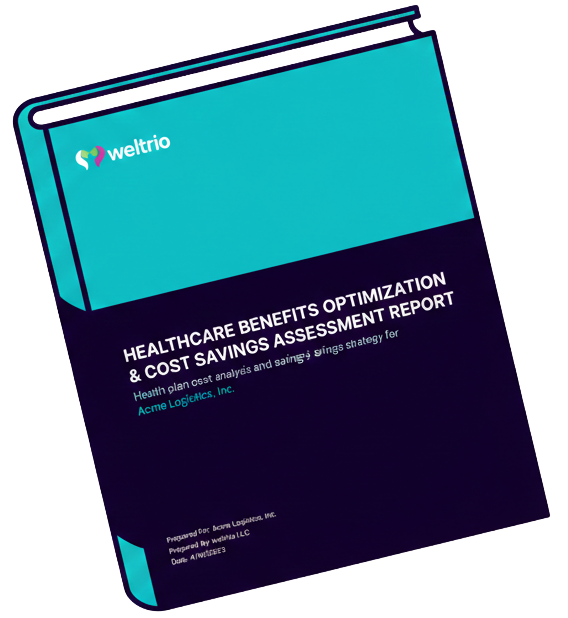
We'll show you where money is leaking, risks are growing, and what you can fix within your current structure. No pressure to change brokers, carriers, or benefit design. Just clarity.
- Gap analysis based on your actual plan structure
- Clear findings you can share with your broker
- Recommendations that layer on — no disruption required



Real-Time Symptom Assessment
When employees are considering the ER, our nurses assess their symptoms in real-time. We determine whether the situation truly requires emergency care or if a lower-cost alternative would be equally effective.
Alternative Care Routing
For non-emergencies, we direct employees to appropriate alternatives: urgent care centers, telehealth visits, next-day primary care appointments, or home care with monitoring. Each alternative saves thousands compared to unnecessary ER visits.
Emergency Validation
When symptoms do indicate a true emergency, we confirm that immediately and help coordinate care. ER avoidance doesn't mean avoiding necessary emergency care—it means reserving ER visits for actual emergencies.
Cost Savings Documentation
We track every ER avoidance interaction, documenting the alternative care used and estimated savings. This data demonstrates concrete ROI from clinical navigation services.
What is ER Avoidance Navigation?
ER Avoidance Navigation is a real-time clinical service that helps employees determine whether their symptoms require emergency care or if appropriate alternatives exist.
When employees feel they might need the ER, they call Weltrio first. Our nurses assess the situation and either confirm the ER is necessary or direct them to equally effective, much less expensive alternatives.
This isn't about denying care or cutting corners—it's about matching care intensity to clinical need. True emergencies go to the ER. Non-emergencies get appropriate care elsewhere.
Why Does ER Overuse Cost So Much?
Most employers renew their health plans year after year without questioning the underlying assumptions. Brokers present options, carriers set rates, and leadership approves budgets based on incomplete information.
The result? Companies overpay for benefits employees don't use while missing coverage gaps that create real risk. They accept premium increases as inevitable rather than addressable. They lack visibility into where their money actually goes.
A Healthcare Risk Assessment changes that. It gives you the data and insight to make informed decisions, negotiate from a position of strength, and take control of one of your largest operating expenses.
How It Works
ER avoidance navigation activates whenever employees are considering emergency care.
Employee Contacts Weltrio
Before heading to the ER, employees call their Weltrio nurse. This can happen at any hour—ER consideration happens 24/7.
Clinical Assessment
The nurse assesses symptoms to determine if the situation is a true emergency or if it can be safely addressed through alternative care.
Care Recommendation
Based on assessment: true emergencies are directed to the ER with coordination support. Non-emergencies are routed to urgent care, telehealth, or other appropriate alternatives.
Follow-Up Monitoring
For non-emergencies directed elsewhere, we follow up to ensure the alternative care was effective and symptoms resolved appropriately.
When Should Employees Call Before Going to the ER?
Employees should call Weltrio before any ER visit where they're uncertain about necessity:
• Late-night symptoms that feel concerning but aren't obviously emergencies
• Weekend illness when regular doctors are unavailable
• Situations where 'it might be nothing but I want to be safe'
• Child symptoms that worry parents but may not require ER
• Chronic condition flare-ups that feel worse than usual
Exception: For clearly life-threatening emergencies (severe chest pain, difficulty breathing, stroke symptoms, major trauma), call 911 or go directly to the ER. Don't delay obvious emergencies for triage.
Where is ER Avoidance Navigation Available?
ER avoidance navigation is available 24/7 wherever employees are located:
• At home considering whether to drive to the ER
• While traveling in unfamiliar cities
• After hours when alternatives feel limited
• Any location with phone access
We can recommend urgent care facilities, telehealth options, and other alternatives near the employee's current location, making it easier to choose appropriate care even in unfamiliar areas.
Who Benefits Most from ER Avoidance Navigation?
While all employees benefit, certain groups see particular value:
• Parents with young children (pediatric concerns frequently trigger unnecessary ER visits)
• Employees prone to health anxiety who default to worst-case thinking
• Workers with limited healthcare experience who don't know about alternatives
• Night shift workers who assume ER is the only after-hours option
• Anyone who has previously gone to the ER 'just to be safe' for minor issues
See What Our Customers Are Saying

"What could have been data driven, was soon a conversation. Over 3 years with the best coaches, listeners, advisors you could ask for. If Monique didn't have an answer readily, she would note it, research it, and then update you on the answer. Always a positive meeting. Highly recommend!"
— Sue D.
“Our Medical Insurance Premiums were Out of Control! Thanks to Weltrio and their amazing team of healthcare experts, Weltrio is my single most-profitable cost center!”
— Cayuse CEO
Everything You Need to Know
At Weltrio, we are a medically trained team that works with HR and benefits partners at companies of all sizes to improve healthcare quality, reduce risk exposure, and optimize costs. We work within your existing plan structure—providing employers with clarity, trust, and transparency at every step. Whether you're upgrading your benefits plan or building from scratch, we've got you covered.
Is this the same as telemedicine?
No. Clinical support provides guidance and triage, not diagnosis or treatment. We help employees decide when and where to seek care.How many nurses will be assigned to our company?
Assignment depends on your company size and typical utilization. Smaller companies may share a primary nurse with backup coverage. Larger organizations get dedicated teams. Either way, employees experience consistent relationships with clinical professionals who know them.Who answers calls in the middle of the night?
Board-certified nurses from your Weltrio clinical team. We staff night shifts with experienced nurses who have full access to your company's benefits information and employee interaction history. It's not an outsourced answering service.What protocols do nurses use for triage?
Our nurses use evidence-based clinical decision support protocols developed from emergency medicine and primary care best practices. These protocols are regularly updated based on current medical guidelines and are customized for telephone/virtual assessment settings.How much does an unnecessary ER visit actually cost?
Average ER visits cost $2,200 or more—even for minor issues. Add lab work, imaging, or specialist consultation and costs climb quickly. The same conditions treated at urgent care typically cost $150-300, and telehealth visits run $50-75.